

Foundational Telemedicine
Led the end-to-end design and development of a blended telemedicine training program for healthcare providers focused on delivering high-quality, patient-centered virtual care. Conducted needs analysis with clinical stakeholders to identify gaps in virtual communication, documentation, compliance, and digital bedside manner.
Designed interactive e-learning modules in Articulate Storyline featuring branching patient scenarios, animated demonstrations, and knowledge checks that aligned with HIPAA and CMS guidelines.
Deliverables:
Introductory videos & foundational eLearning modules in desktop, tablet and mobile platforms.
Online and instructor-led practice exercises
Leadership videos
Alternate versions scaled for different units and audiences
Outcomes:
Improved provider confidence based on post-assessment surveys
Improved virtual care HCAHP (patient satisfaction) scores
Reduction of adverse incident reports for telemedicine visits
Gathered post-launch feedback to create various iterations of modules adapted for different clinical units.
Improving Patient Experience: A Scenario-Based Solution
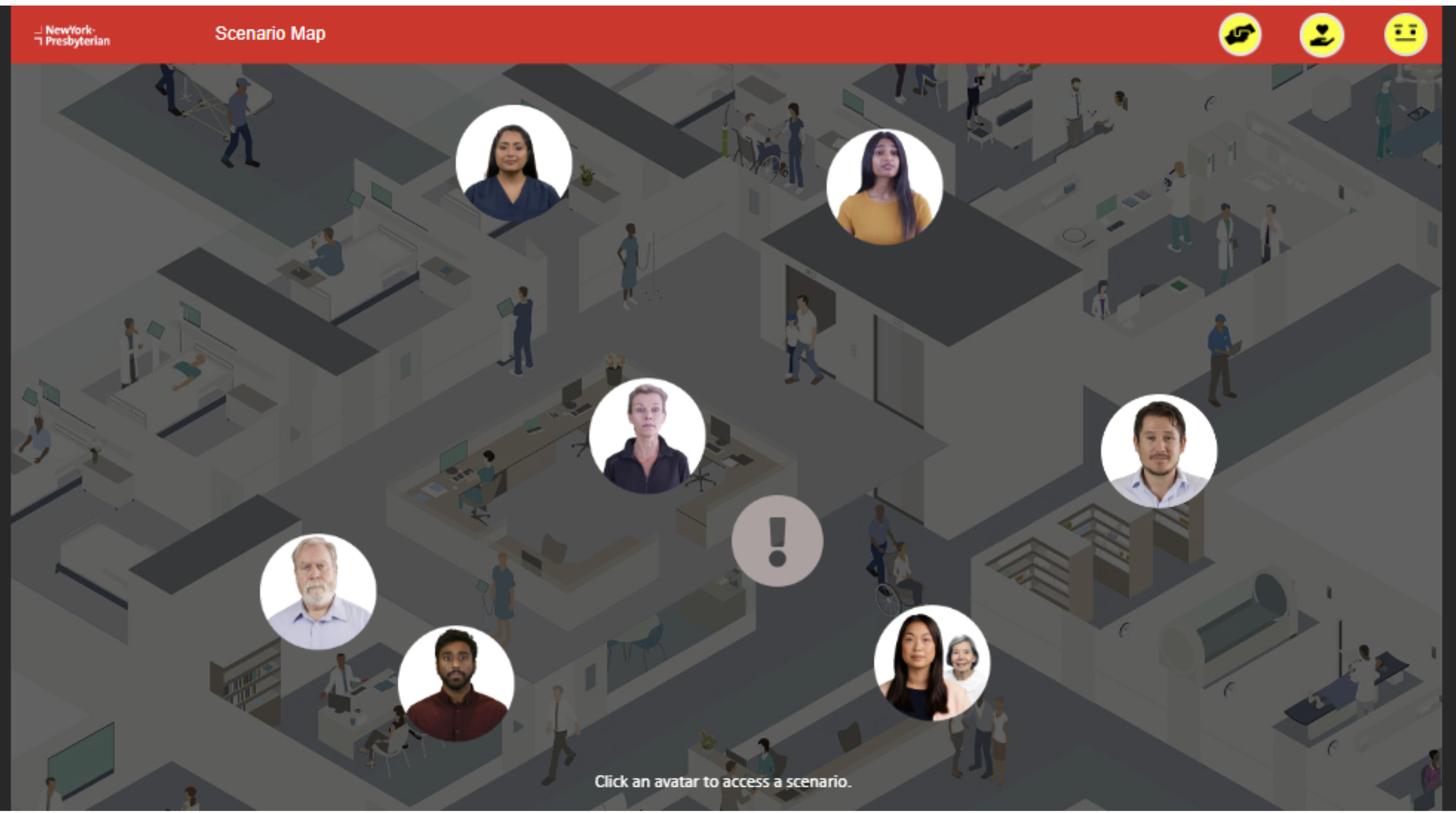
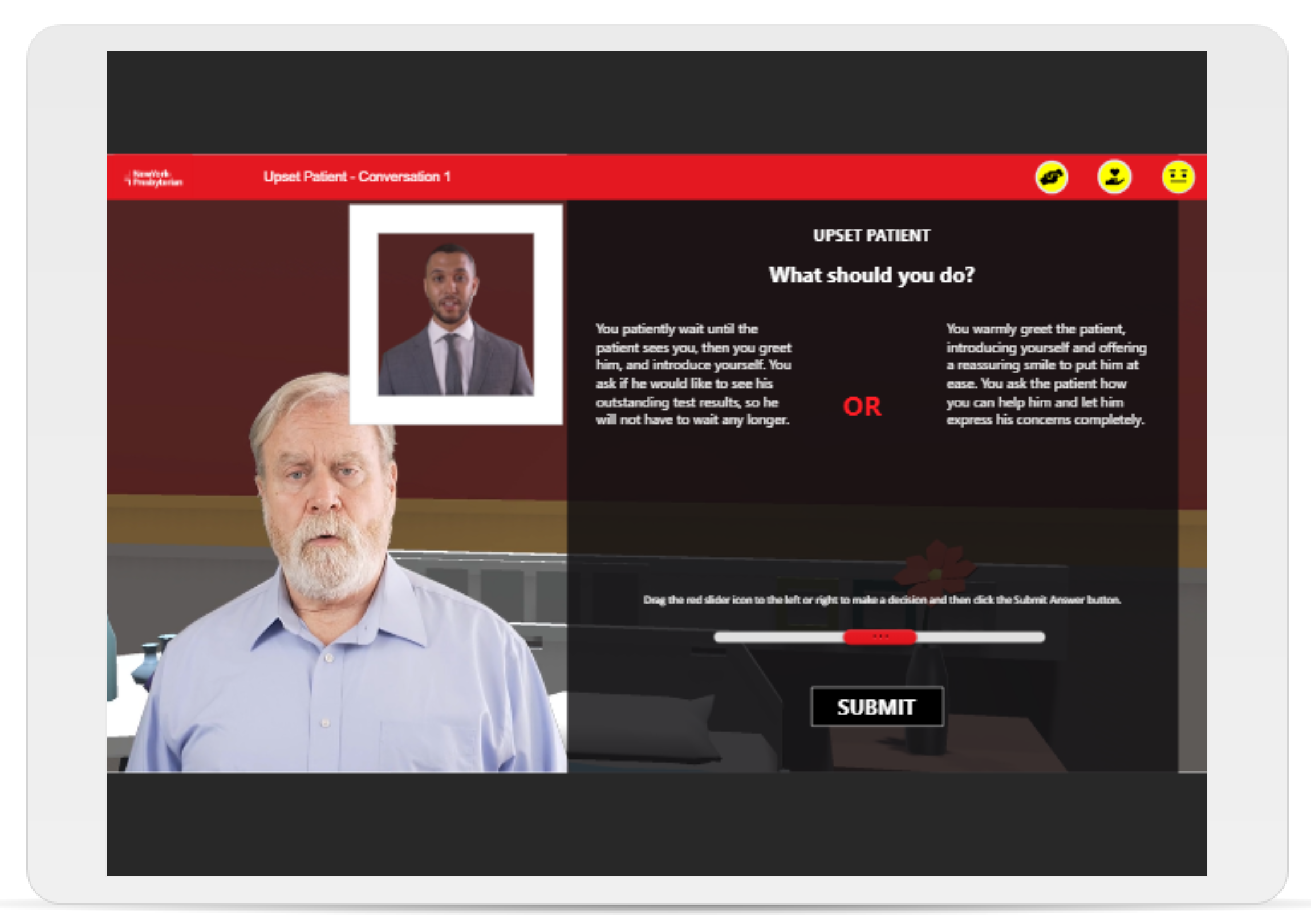
Designed and developed an interactive, scenario-based eLearning solution to improve patient experience and satisfaction scores across hospital units. The course immerses learners in realistic patient interactions where they must respond to common situations such as long wait times, communication breakdowns, perceived lack of empathy, and discharge confusion.
Built in Articulate Storyline, the course features complex branching pathways that dynamically adjust based on learner decisions. Each response triggers consequences that reflect real-world patient reactions, influencing satisfaction scores and care outcomes within the simulation. A dynamic scoring engine tracks empathy, clarity, and service recovery effectiveness, providing personalized feedback at key decision points.
Multimedia elements include voiceover-driven patient dialogue, environmental sound design, and visual performance dashboards. Learners can replay scenarios to explore alternative approaches, reinforcing behavior change through practice and reflection.
Deliverables:
Interactive learning module
Packaged curriculum/course
Course source structure and assets to revise for future needs
Outcomes:
HCAHPS (patient satisfaction) scores increased for 2 consecutive quarters immediately following rollout
Formal patient complaints related to poor communication decreased
Reduced adverse incident reporting
Positive user feedback led to requests to scale product to additional campuses and clinical units
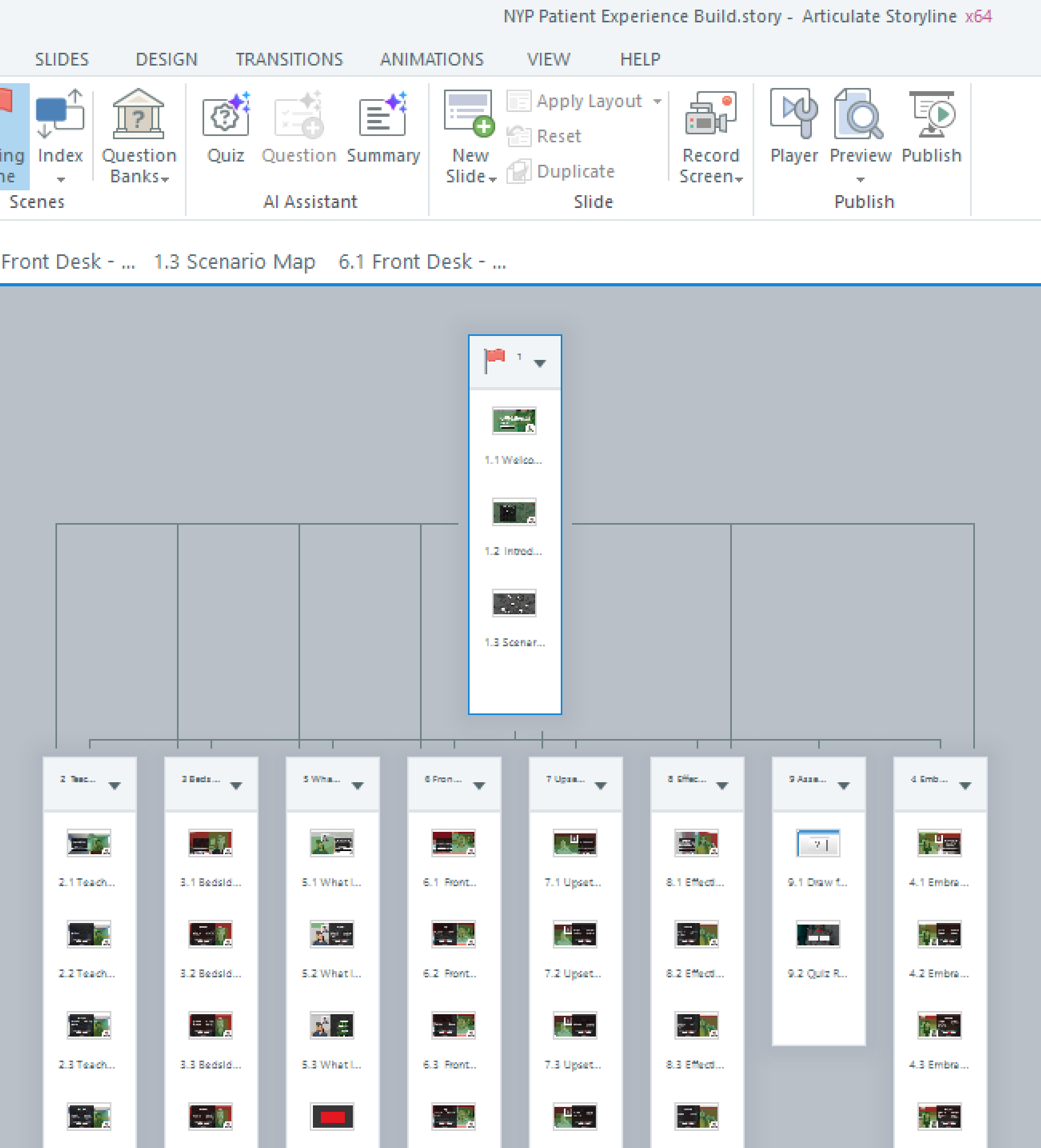
Comprehensive Course Branching in Articulate
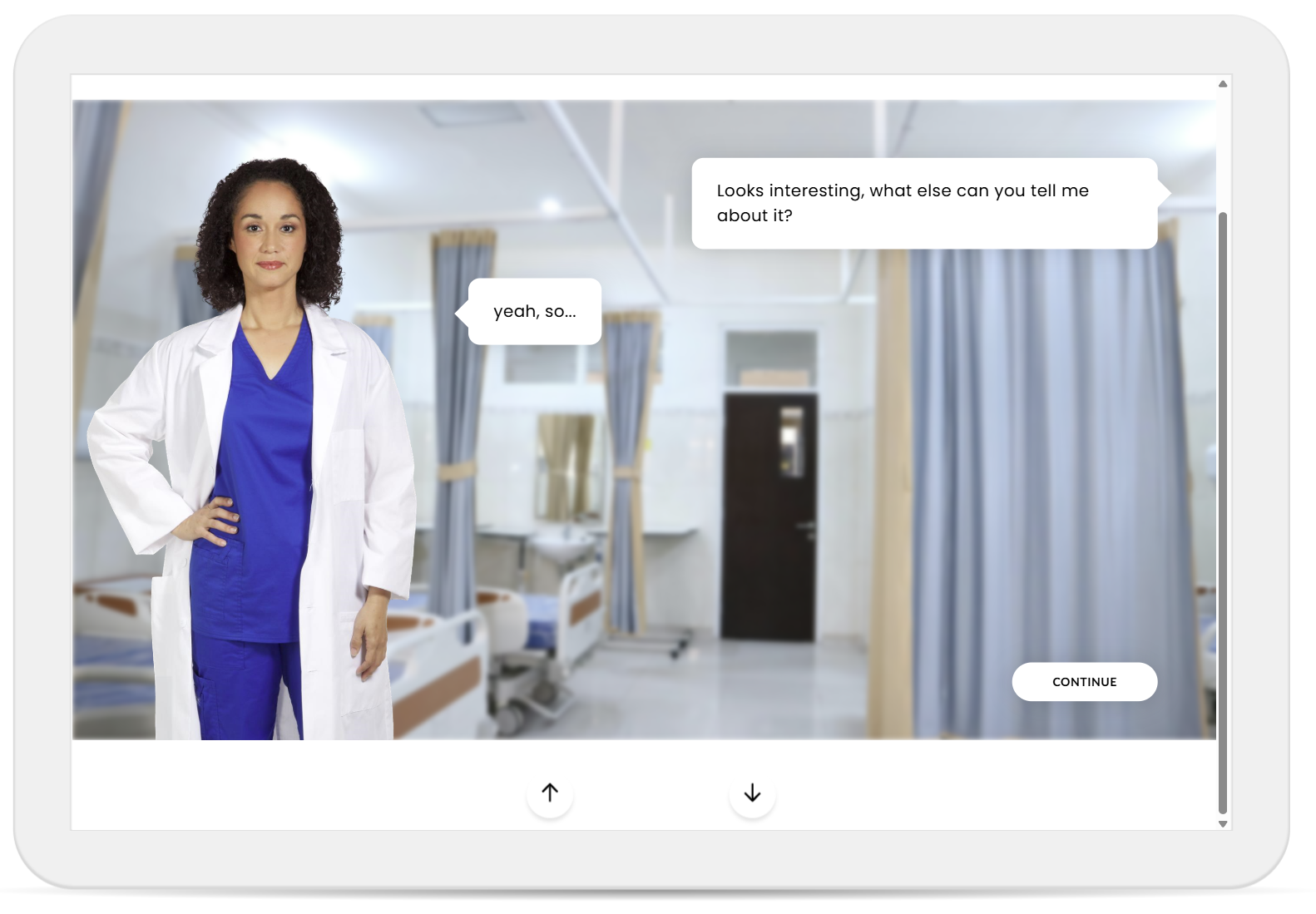
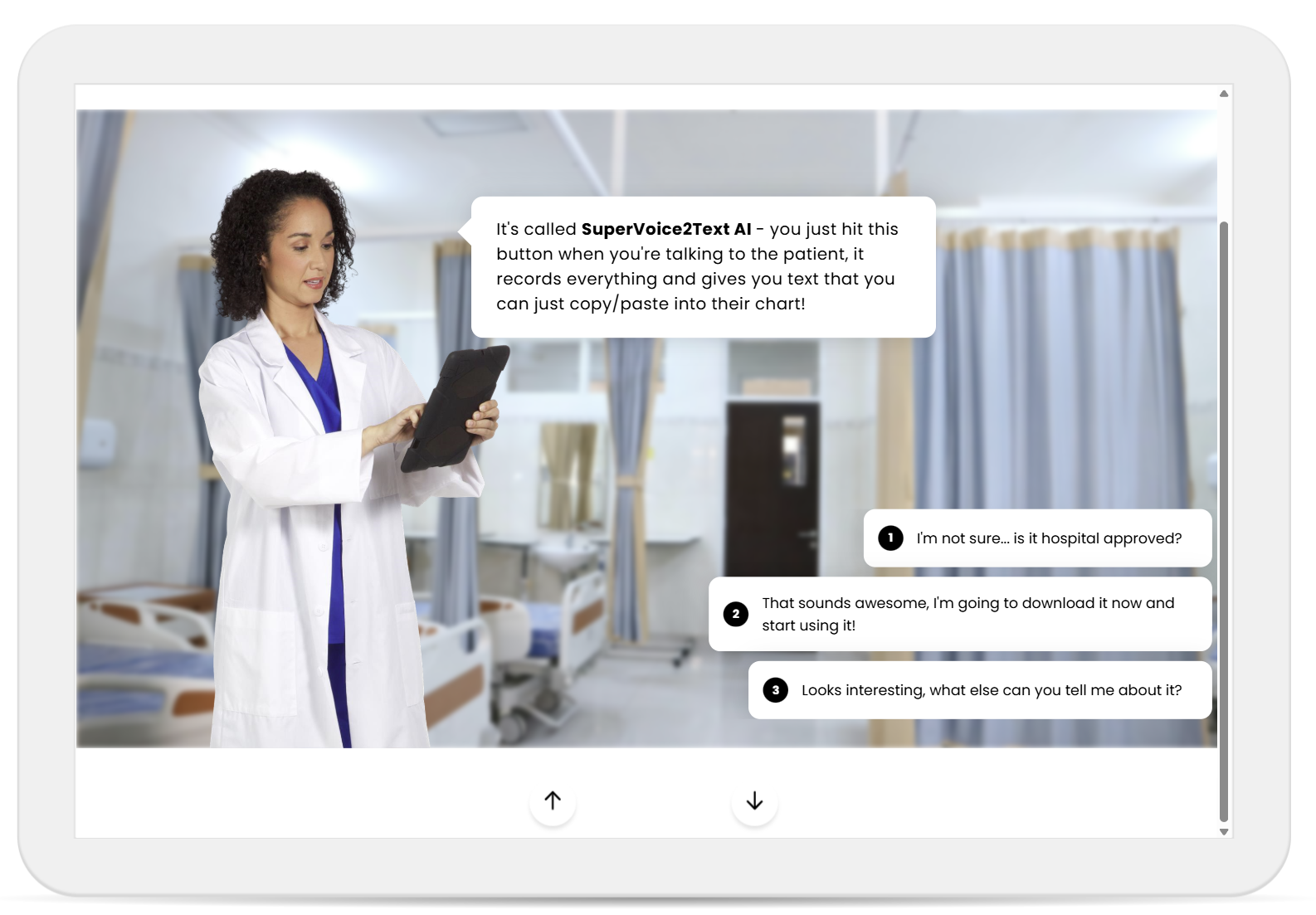
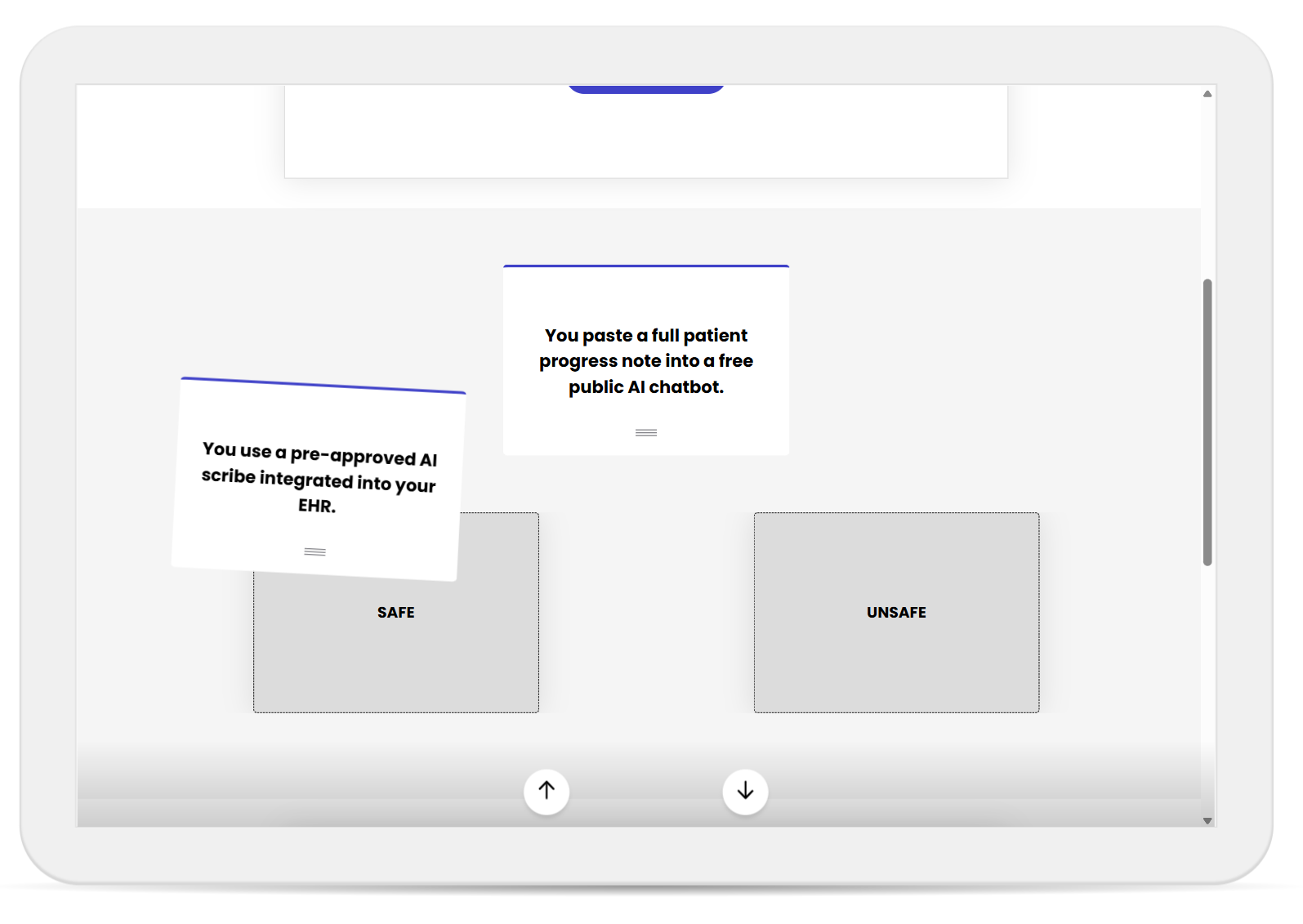
The Use of AI in Clinical Documentation
This module was a rapid-development fast turnaround targeted towards clinical providers who may be using AI to assist with clinical documentation.
Patient privacy is a highly-regulated and critical aspect of the healthcare environment. While the growing use of AI to assist documentation helps reduce workload for clinical providers, it also comes with considerations:
Recognizing when PHI may be at risk
Distinguish between approved and unapproved AI tools
Applying safeguards before entering patient information
Verifying AI-generated documentation before signing
This module assists providers in navigating these considerations through the use of real-life scenarios, interactive design and clinical documentation tips, tricks and resources.
Deliverables:
Microlearning module with interactive scenarios
External resource guide
Outcomes:
Reduced incident reporting related to documentation
Regulatory audit compliance
Improved employee satisfaction due to reduced workload
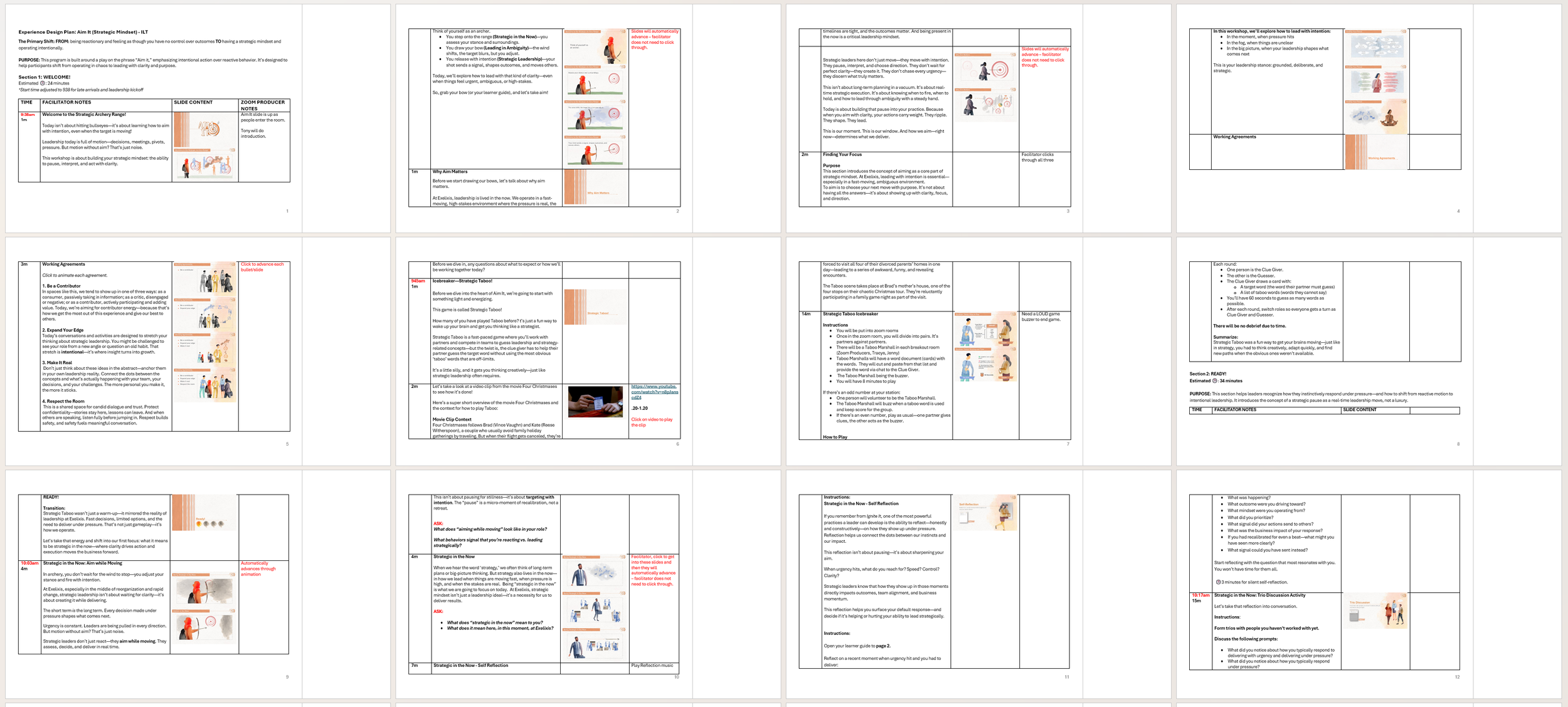
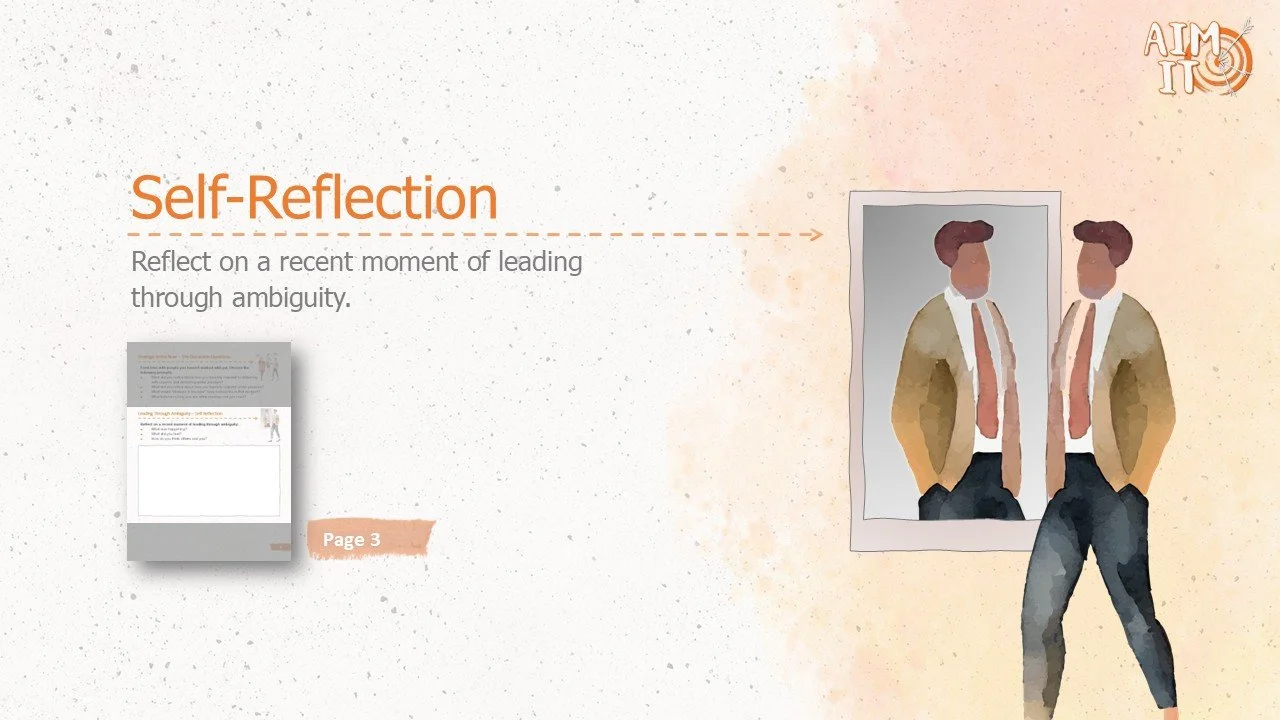
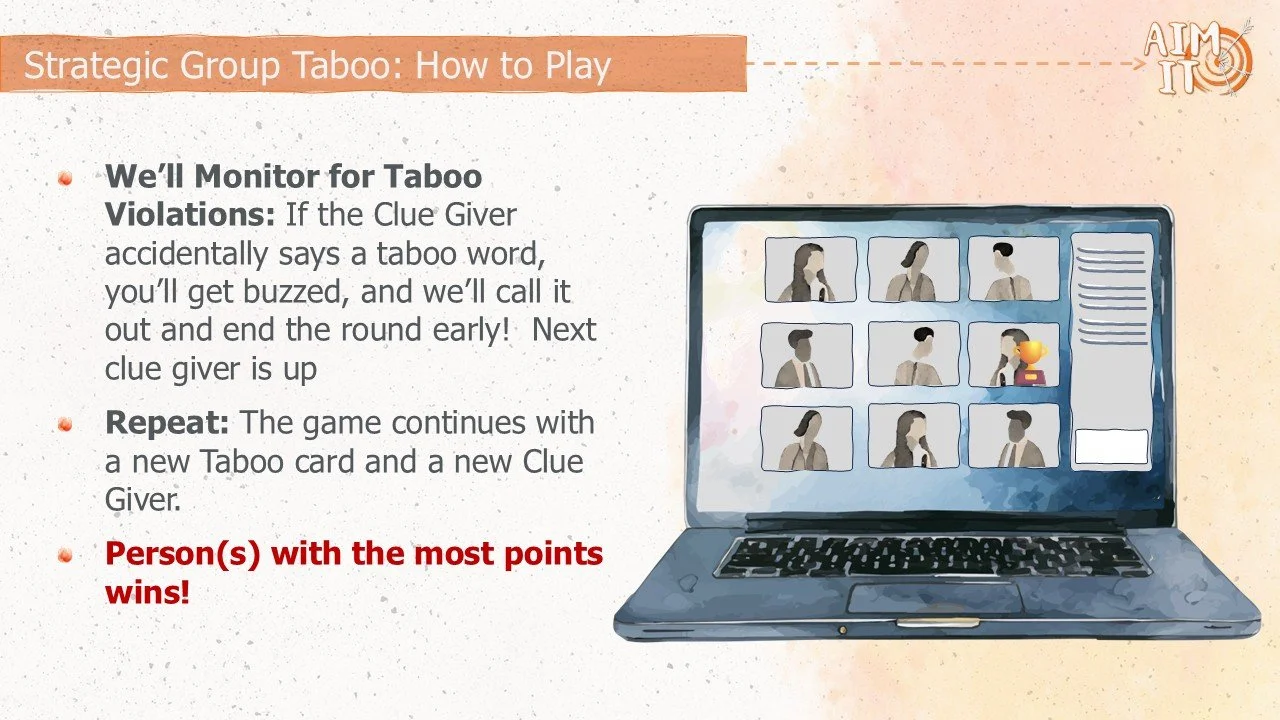
Run of Show Facilitator Guide
![Aim It Learner Guide [FINAL]_Page_1.jpg](https://images.squarespace-cdn.com/content/v1/55844bdfe4b0eb3c19c81b42/1771105607639-UYBH3I8CD7KT803W42AI/Aim+It+Learner+Guide+%5BFINAL%5D_Page_1.jpg)
![Aim It Learner Guide [FINAL]_Page_2.jpg](https://images.squarespace-cdn.com/content/v1/55844bdfe4b0eb3c19c81b42/1771105607620-4V7SP7DV89G99OR5AY22/Aim+It+Learner+Guide+%5BFINAL%5D_Page_2.jpg)
![Aim It Learner Guide [FINAL]_Page_3.jpg](https://images.squarespace-cdn.com/content/v1/55844bdfe4b0eb3c19c81b42/1771105608680-D5TN6EZMDNARIK6ISA4X/Aim+It+Learner+Guide+%5BFINAL%5D_Page_3.jpg)
![Aim It Learner Guide [FINAL]_Page_4.jpg](https://images.squarespace-cdn.com/content/v1/55844bdfe4b0eb3c19c81b42/1771105608779-5E6F1LERUSO558W8HQT3/Aim+It+Learner+Guide+%5BFINAL%5D_Page_4.jpg)
![Aim It Learner Guide [FINAL]_Page_5.jpg](https://images.squarespace-cdn.com/content/v1/55844bdfe4b0eb3c19c81b42/1771105609677-FN2P0QL61D3BWUBRZDXF/Aim+It+Learner+Guide+%5BFINAL%5D_Page_5.jpg)
![Aim It Learner Guide [FINAL]_Page_6.jpg](https://images.squarespace-cdn.com/content/v1/55844bdfe4b0eb3c19c81b42/1771105609855-GQ53UBPZ1129BFD3BFGG/Aim+It+Learner+Guide+%5BFINAL%5D_Page_6.jpg)
![Aim It Resource Guide [FINAL]_Page_1.jpg](https://images.squarespace-cdn.com/content/v1/55844bdfe4b0eb3c19c81b42/1771105610784-25UO9UR55G94QQG9JF0Y/Aim+It+Resource+Guide+%5BFINAL%5D_Page_1.jpg)
![Aim It Resource Guide [FINAL]_Page_2.jpg](https://images.squarespace-cdn.com/content/v1/55844bdfe4b0eb3c19c81b42/1771105610974-YF3C9LFJW2QZ2ORR9XD9/Aim+It+Resource+Guide+%5BFINAL%5D_Page_2.jpg)
AIM IT: Strategically Handling Ambiguity for Leaders
The client is a rapidly growing medium-sized organization with a leadership team struggling to keep pace. This program was designed to help participants shift from operating in chaos to leading with clarity and purpose.
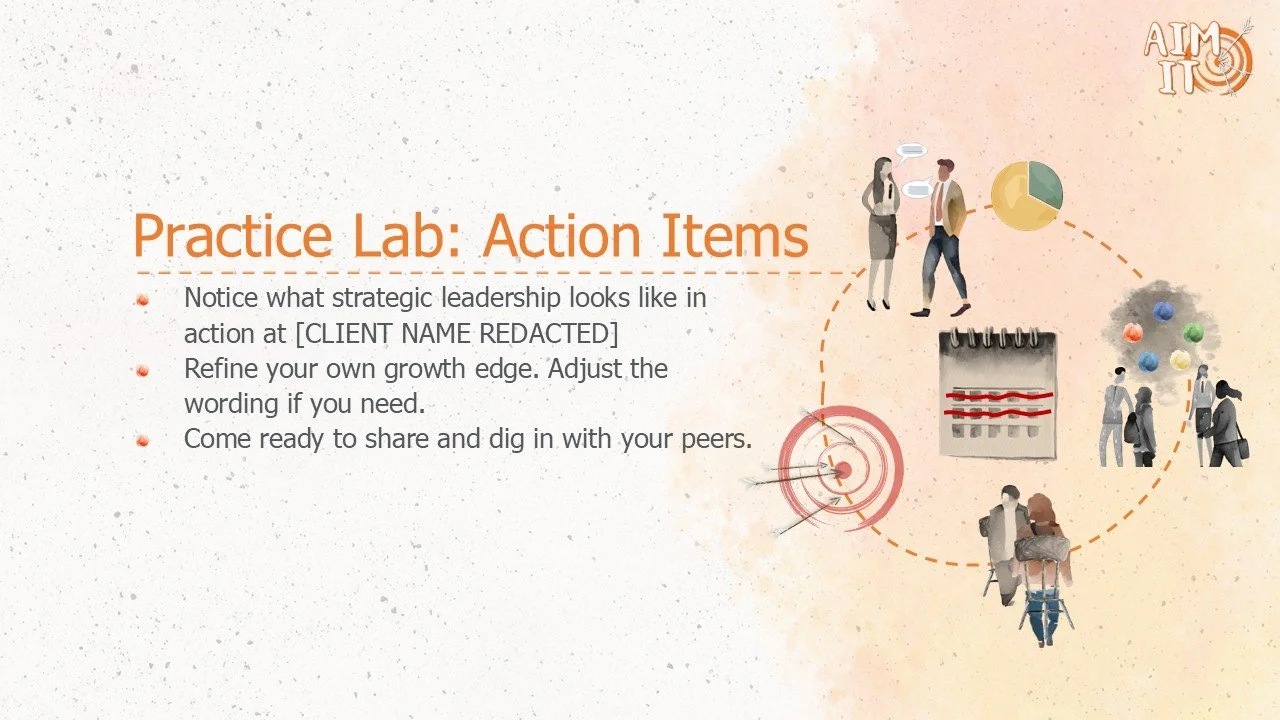
Conducted stakeholder interviews, learner analysis to ensure this was tied to leadership behaviors and had a tangible outcome that actually connected to their day-to-day needs. We built a blended solution that included live and virtual workshops, peer discussion labs, and a toolkit managers could use in real-time. The participants effectively designed their own scenario, so leaders could practice navigating gray areas that they deal with in their real daily professional lives. We provided them with a safe simulation space, allowing them to learn from mistakes with no consequences.
Learners can replay scenarios to explore alternative approaches, reinforcing behavior change through practice and reflection.
Deliverables:
Workshop Deck for ILT and VILT delivery
Companion Learner Guide
External Resource Guide
Run of Show Guide for Facilitators and Train-the-Trainer Guidelines
Outcomes:
Improved leadership confidence scores
Higher reported employee engagement within participating teams
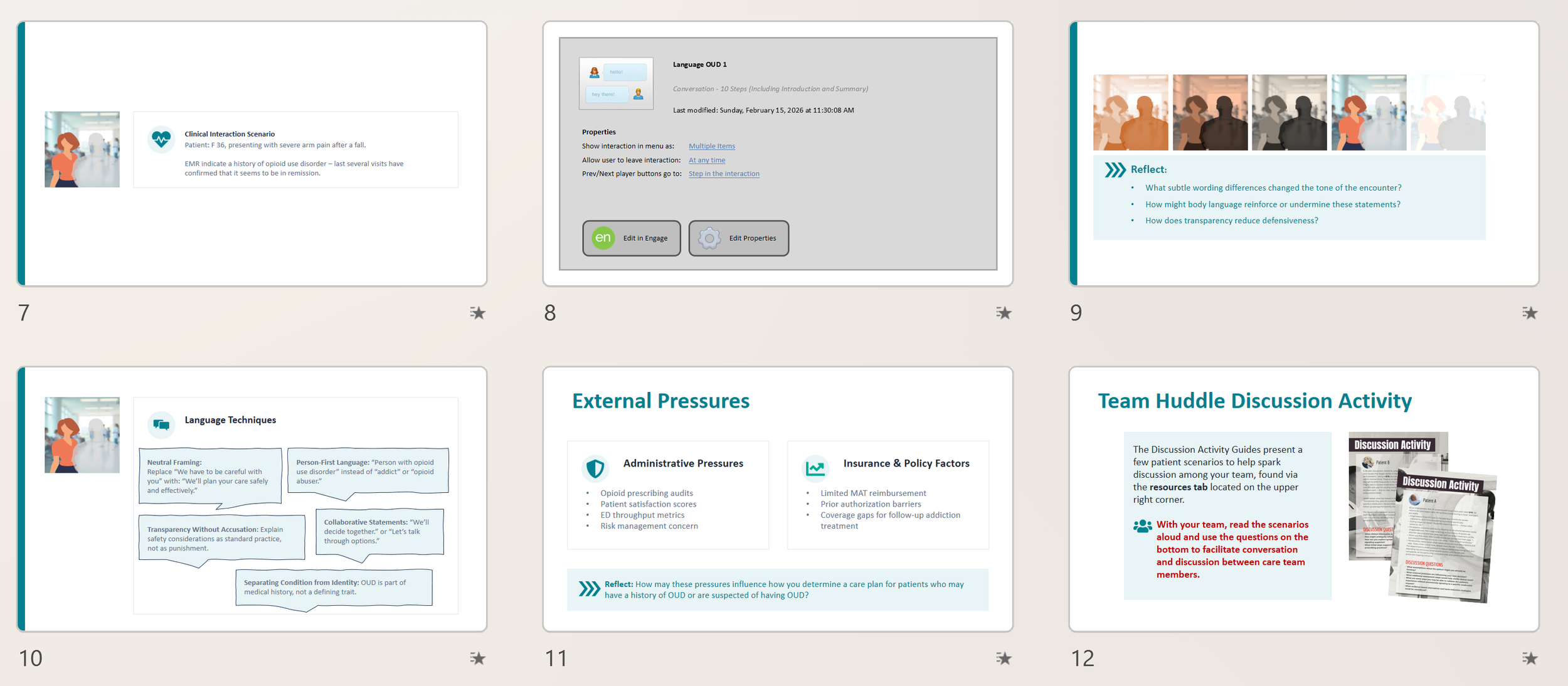
The Treatment of Opioid Use Disorder
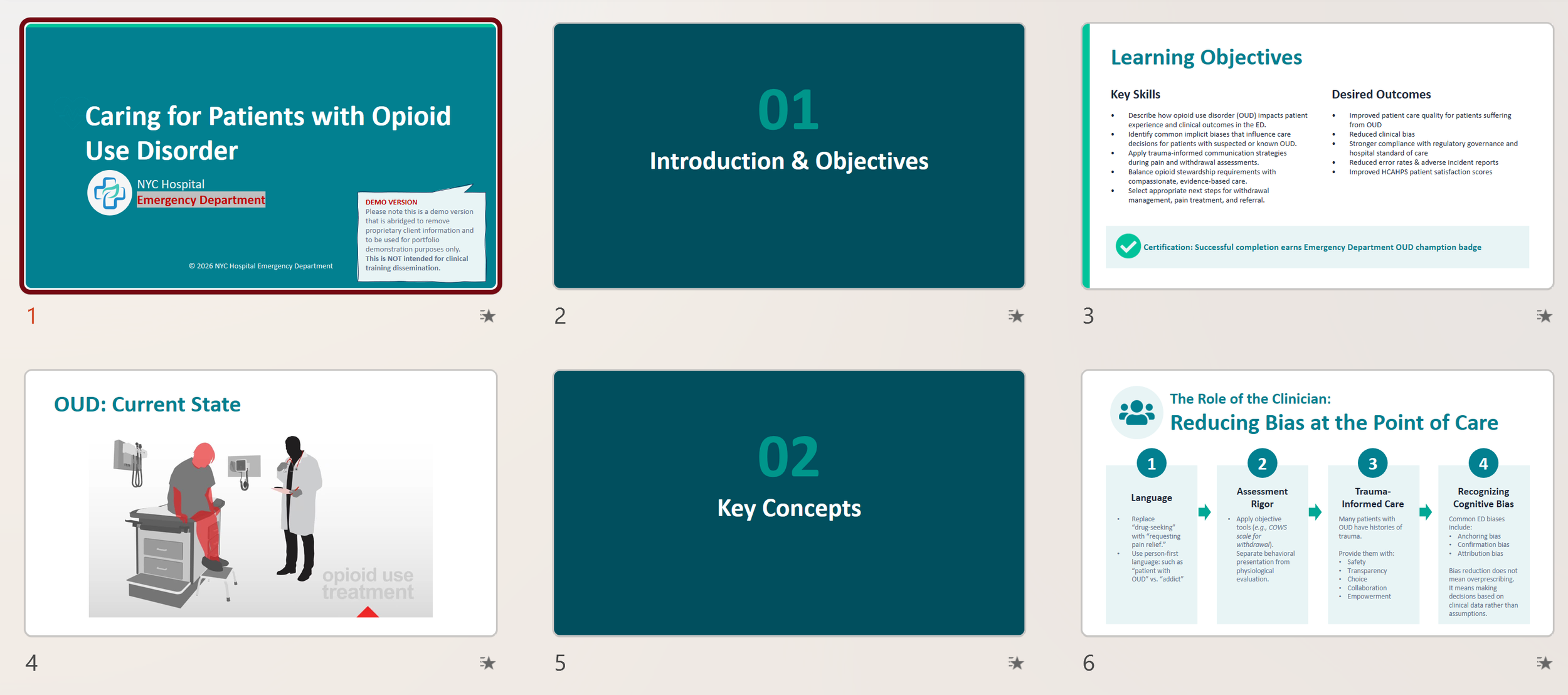
What started out as a request for basic module and training guide on the use of Naloxone (Narcan) grew into something far more significant. Building on a client relationship, we identified a need across Emergency Departments to help improveclinical attitudes towards patients suffering from Opioid Use Disorder (commonly referred to as OUD).
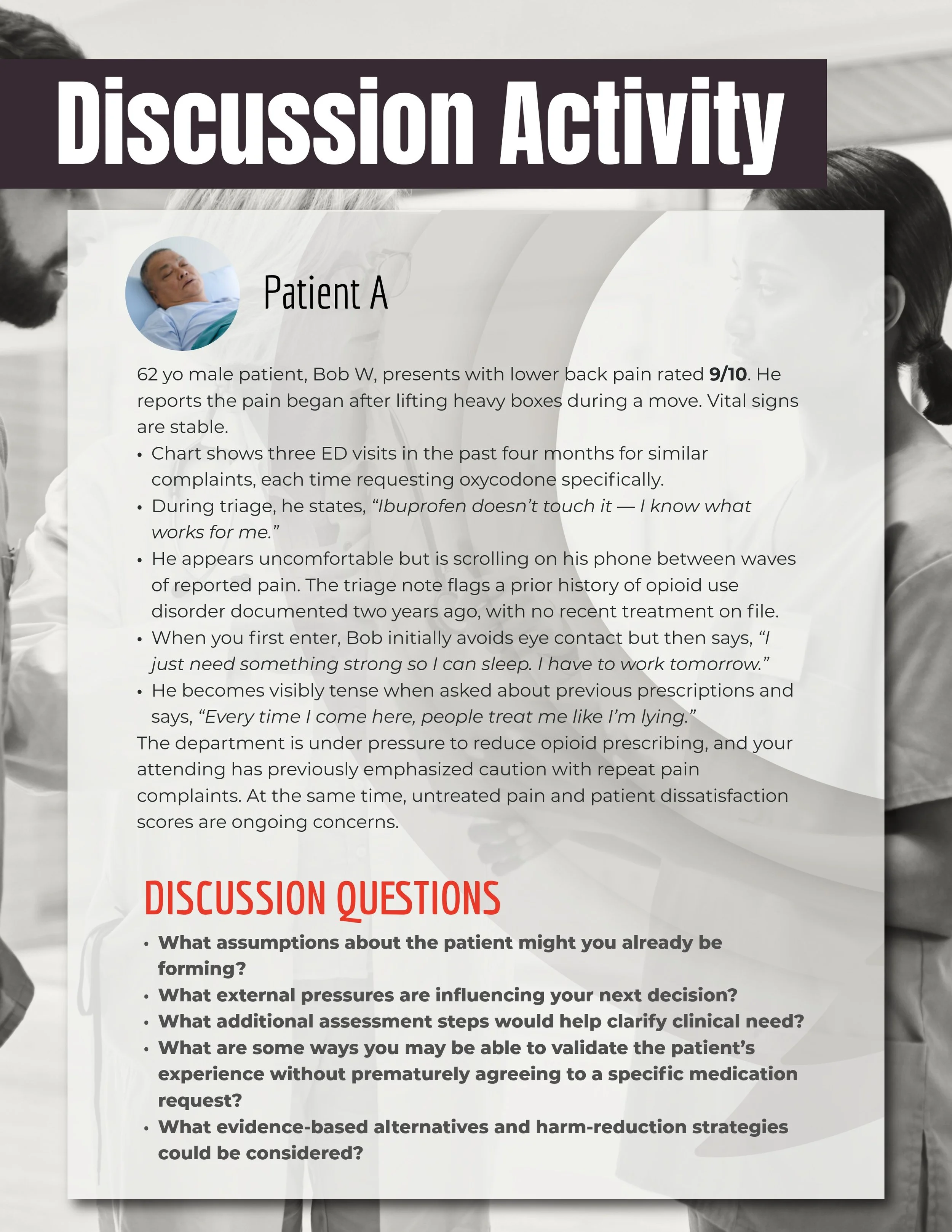
Partnering with stakeholders on the front lines, we replicated contextually relevant situations and scenarios, that allowed clinicians to practice situations they face everyday in a safe consequence-free environment. This allowed our audience to fine tune their behaviors and responses to patients suffering from OUD, as well as reflect on and identify their own biases.
Deliverables:
Videos with brand-aligned design and animations
Interviews from a wide variety of internal and external clinical subject matter experts
Scenario-focused microlearning modules
Scenario cards for use during shift huddles
Putting Citizenship Into Practice
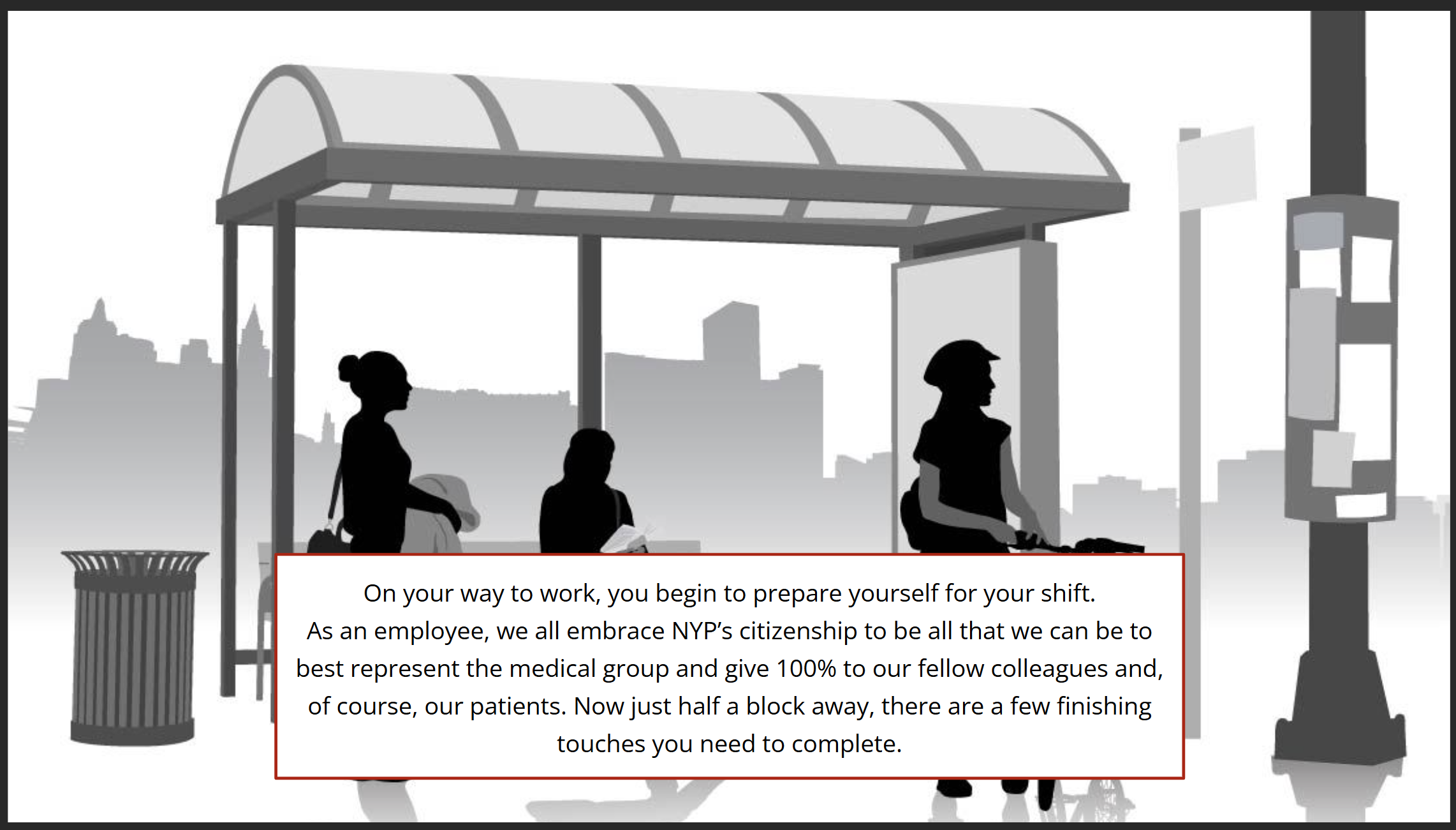
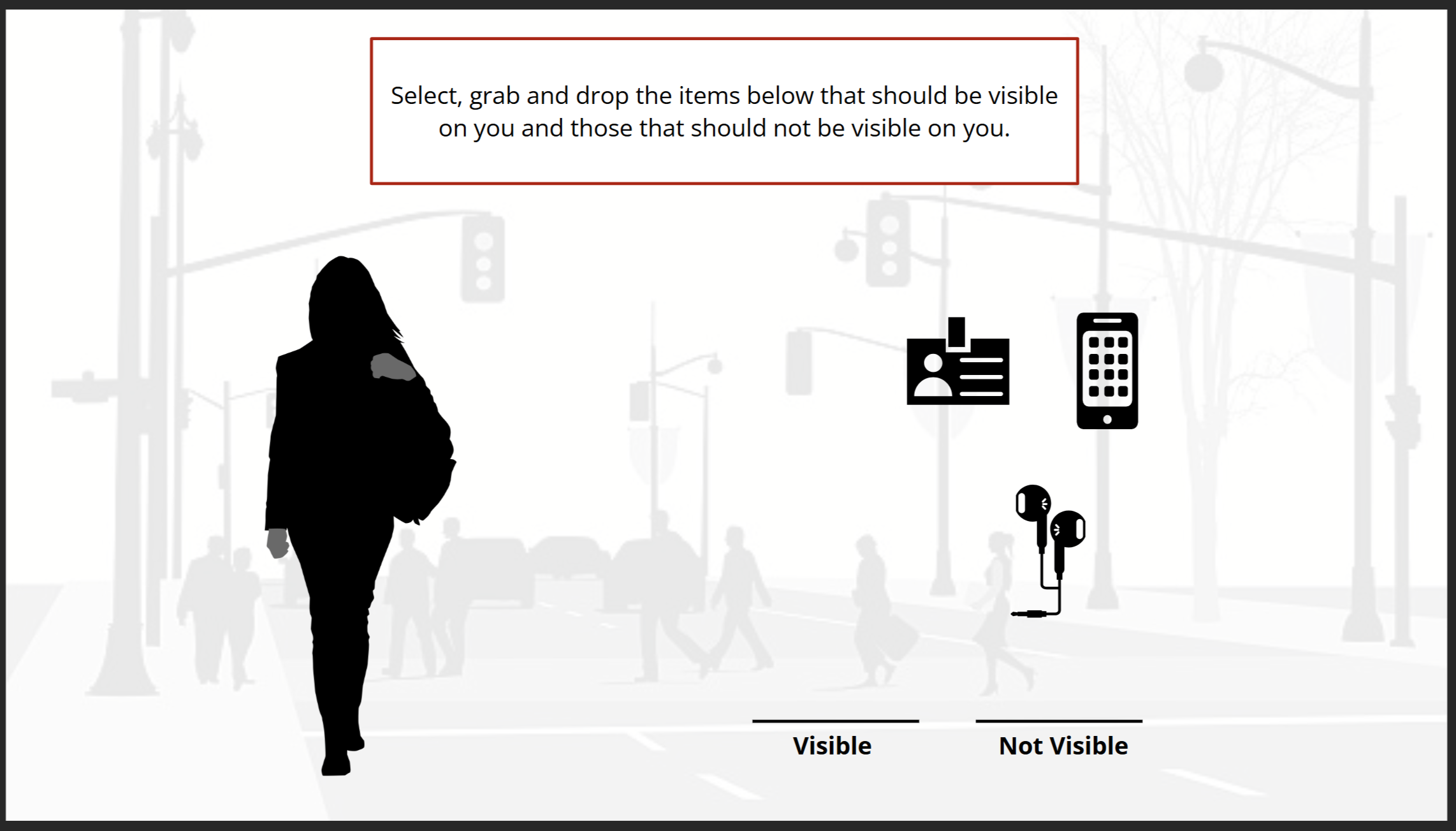
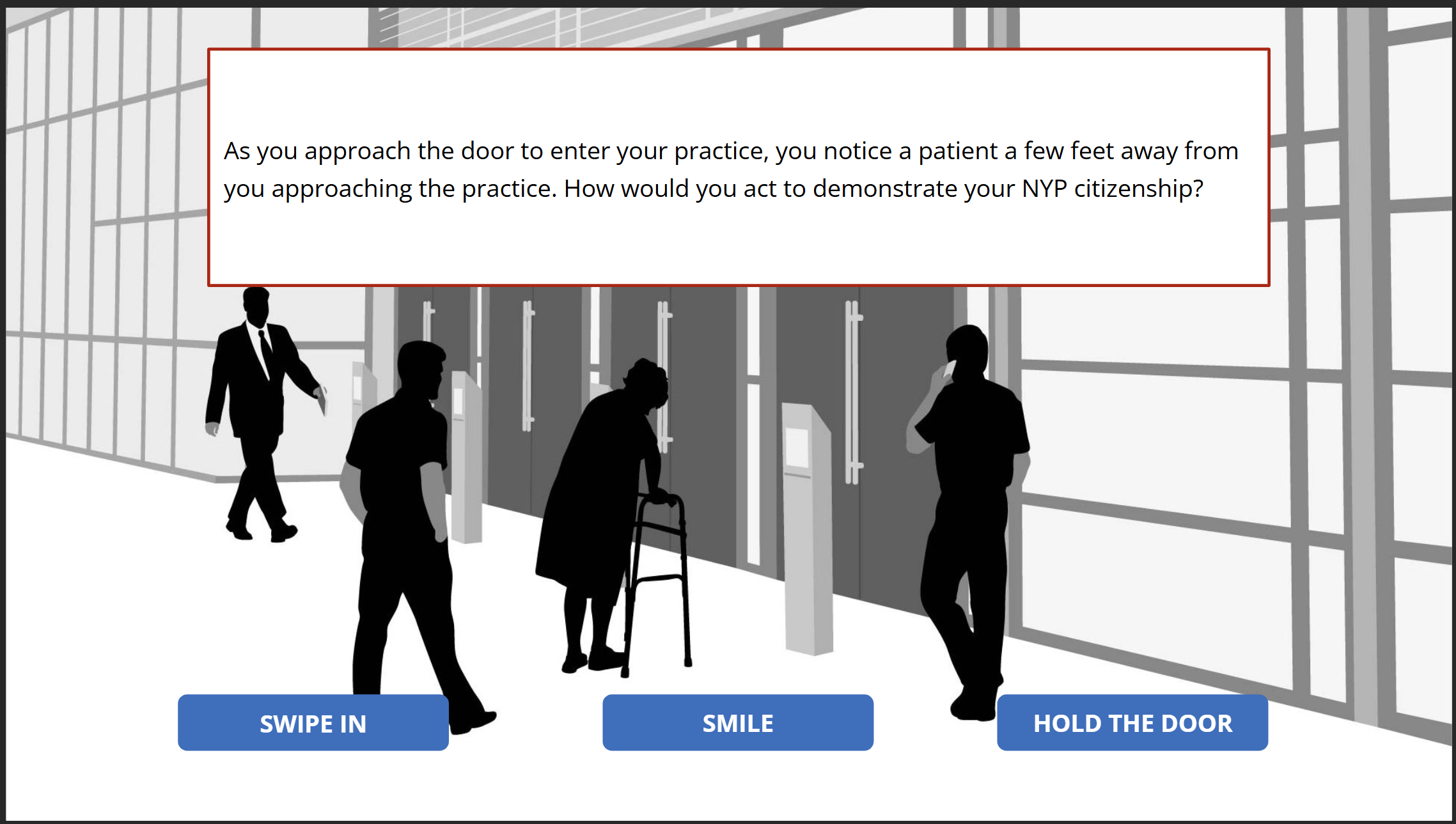
Putting Citizenship into Practice is an interactive, scenario-based eLearning course designed for hospital employees who play a vital role in shaping the patient experience and workplace culture.
Through realistic, day-to-day scenarios set in clinical and non-clinical environments, learners practice demonstrating professionalism, accountability, respect, and teamwork in ways that strengthen both the hospital community and public trust. The course challenges employees to consider how their behaviors—whether in patient interactions, hallway conversations, interdisciplinary collaboration, or digital communication—reflect on the organization and influence patient perceptions.
By reinforcing shared values and clear behavioral expectations, this course empowers staff to actively contribute to a culture of excellence, compassion, and community within the hospital.
Deliverables:
Videos with brand-aligned design and animations
Scenario-focused microlearning modules
Scenario cards for use during shift huddles
Outcomes:
Improved HCAHPS (patient satisfaction) scores
Reduced incident reporting related to spatial hazards
Improved Gallup employee scores around feelings of belonging in the workplace
Mobile Heartbeat App Rollout
With the rollout a new enterprise-wide clinical mobile communication app, the organization needed buy-in from users as well as resources to learn how to use the app, when to use it and how it applied to their day-to-day clinical services.
Deliverables:
Awareness video
Scenario-based interactive learning module
Standard operating procedure (SOP) manual
Brand-aligned classroom learning assets (Handouts, worksheets, FAQs)
Addressing Elder Abuse
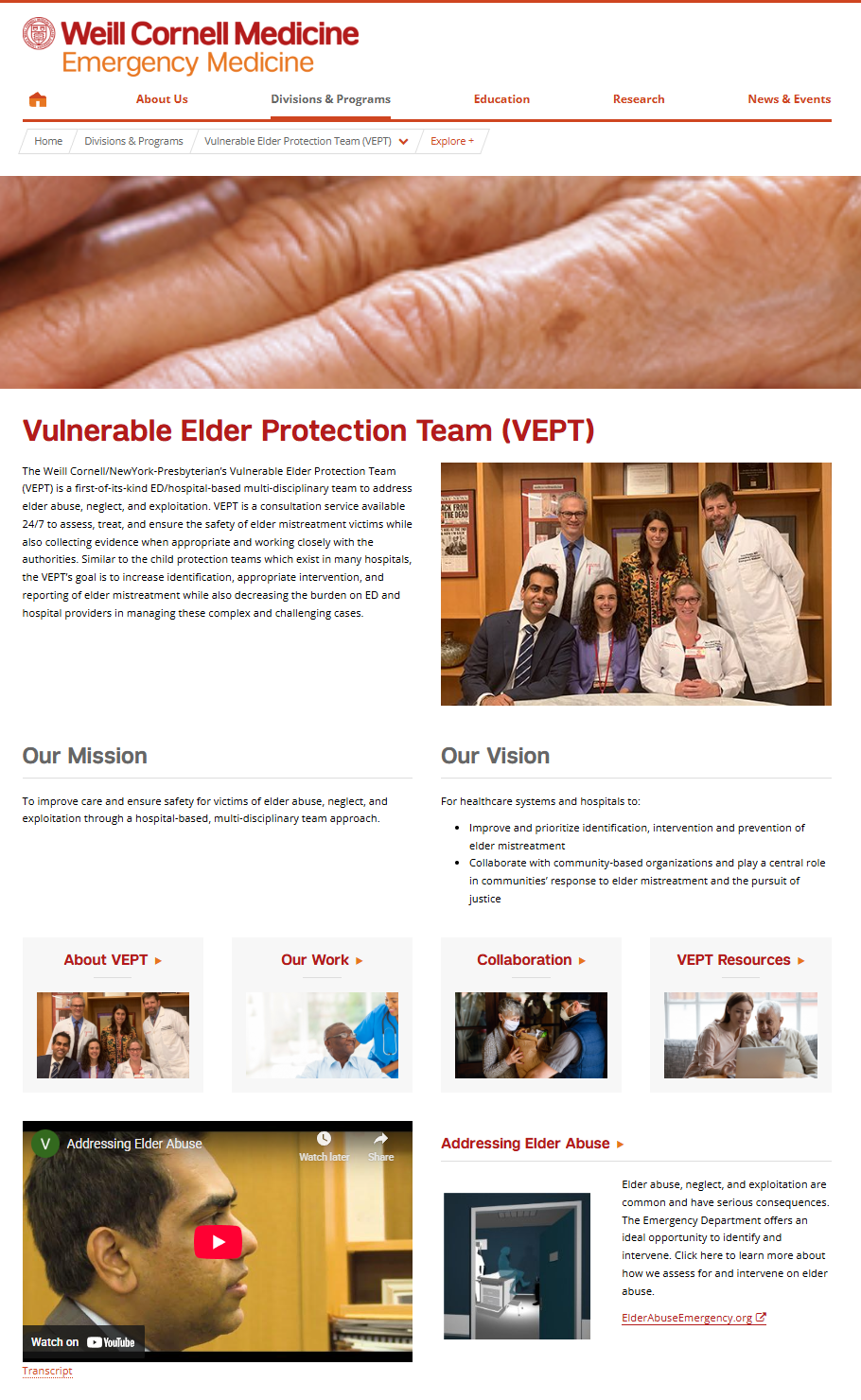
We teamed up with the executive emergency medical clinical care team in order to help raise awareness and underscore the severity of an incredibly important issue in emergency medical treatment.
The ER is often one of the few places where vulnerable older adults come into contact with healthcare professionals outside their home or care setting. Many older adults experiencing abuse may be isolated, fearful, or unable to speak up for themselves due to cognitive impairment or dependence on their abuser. Recognizing warning signs—such as unexplained injuries, poor hygiene, malnutrition, or inconsistent stories—can be the only opportunity to identify and intervene in cases of physical, emotional, financial, or neglect-related abuse. Early recognition and appropriate reporting not only help protect the patient’s immediate safety but can also connect them to resources and support systems that prevent further harm.
Deliverables:
Video with brand-aligned animations
Interviews from a wide variety of internal and external clinical subject matter experts
Click below to see the full Vulnerable Elder Protection Team (VEPT) site, with messaging, training assets and support materials co-developed by our learning solutions team.
Virtual Nursing
The virtual nursing team tasked us with creating a video helping nurses who were new to the virtual space on the technical aspects of how to set up their workstations - and needed it fast. This video was storyboarded, shot and edited in a short time frame.